










 |
|
Slavery Museum wraps up Northeast Tour! Final stop at Compass Group headquarters in Charlotte, NC, perfect ending to a great tour; See the links to reports from all the stops below...
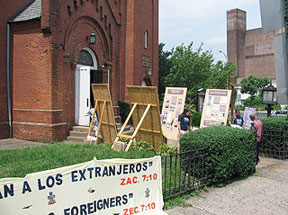
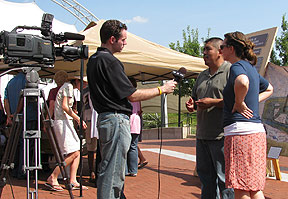
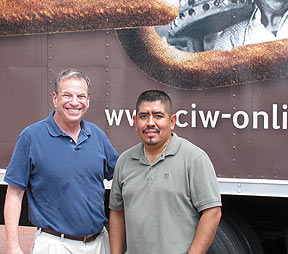
The stop took place in the shadow of foodservice industry leader Compass Group's corporate headquarters (right), and the day was a Stay tuned in the days and weeks ahead for more news from the Campaign for Fair Food, and for details on the slavery museum's upcoming Southeast Tour, a tour designed to take the museum and its message of change through the states -- Florida, Georgia, South Carolina, Alabama and Tennessee -- where Publix does business. This fall is sure to be full of action. See you there! |
|
|
|
But the museum visit wasn't about sending a message to the public or to its suppliers, rather it was an opportunity to educate its own employees about why Compass has made such a wholehearted investment in the goals of Fair Food. |
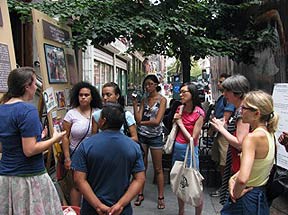
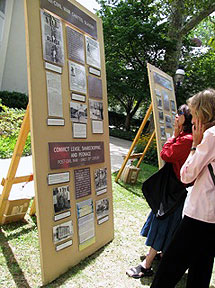
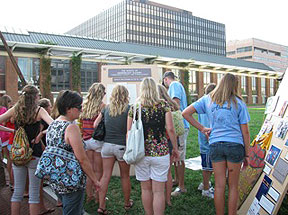
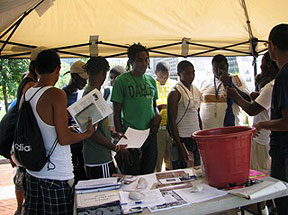
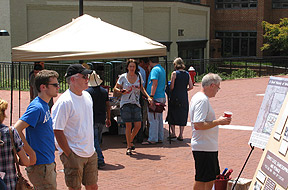
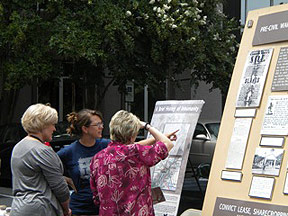
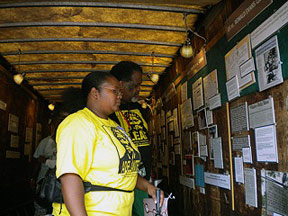
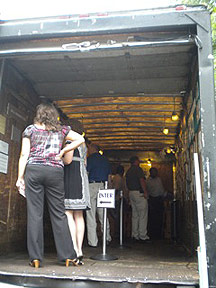 And Compass employees responded, making their way through the museum throughout the day, braving the heat to take advantage of the rare window into conditions in the fields that provide fruits and vegetables to the country's trillion-dollar food industry. |
|
In the end, the visit to Compass headquarters was the perfect finish to a remarkably successful museum tour. The final display of the museum itself is a board that presents the solution to the enduring scourge of slavery -- the Campaign for Fair Food, a growing partnership of farmworkers and consumers with growers and retail food companies to demand and build a more modern, more humane agricultural industry. In keeping with that message, the final stop on the tour cast light on just such a partnership in action, a model for the rest of the food industry that demonstrates, in no uncertain terms, that farm labor justice is not just necessary, and long overdue, but possible. Our thanks go out to our friends at Compass and to all our gracious hosts along the route of the 2010 Northeast Tour. We couldn't have done it without you. And to those thousands of people who passed through the museum and learned, some for the first time, some in still greater depth, of the exploitation in our country's fields, we look forward to joining with you this coming season as we seek to enlist the supermarket giants in the Campaign for Fair Food and, finally, bring a successful end to the decades-old struggle for justice in the fields. |
 |
|
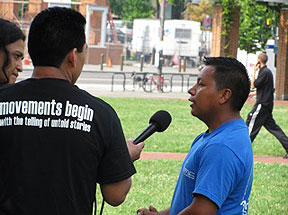
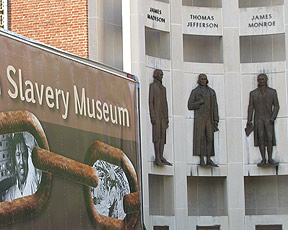
On Monday morning, the museum crew set up in the heart of Boston with City Hall as the backdrop for another hot New England day. The stop yielded a great story on the local NPR affiliate, 99.9 WBUR (about 25:30 minutes into the segment), as well as coverage in the blogosphere. |
|
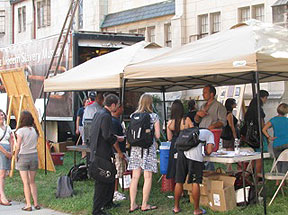
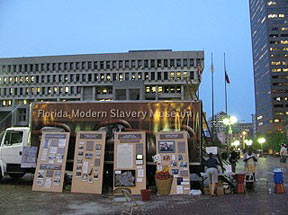 The stop continued well into the evening, as cooler temperatures allowed visitors to linger and inspect the finer details of the exhibit. |
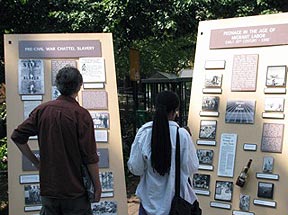 The next day, the tour passed through Northampton, MA, an area that is home to five universities and plenty of conscientious consumers. Set up on Main Street, the museum received visits from the Massachusetts Conference of the United Church of Christ and Nuestras Raices in Holyoke, among others. |
|
|
|
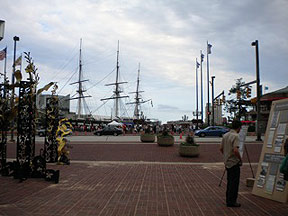
The USS Constellation, the crown jewel of the Inner Harbor, provided a perfect backdrop for the visit. From 1859-1861, the sloop-of-war was the flagship of the US African Squadron -- a unit of the US Navy -- and intercepted three slave ships off the coast of Africa, freeing over 700 slaves. |
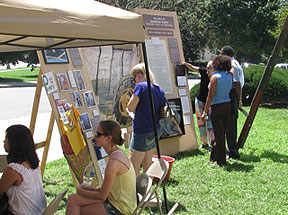
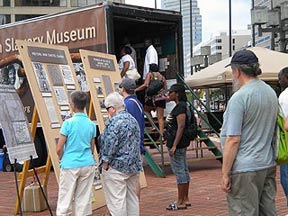 Throughout the day, the museum caught the attention of dozens of tourists and local faith allies... |
Stay tuned for the final tour update from Charlotte, NC! |
 |
|||
Modern-Day Slavery Museum barnstorms New England! Following last week's exciting Ahold actions, the Northeast Tour crew continued to raise awareness about farmworker exploitation in the supermarket industry's tomato supply chain with four New England stops in just two days! Meanwhile, in addition to the Democracy Now story, media coverage of the Modern-Day Slavery Museum continues to pour in. Here's a quick round-up:
For more on the museum, including the Tour Itinerary and the Media Advisory, click here. |
|
||
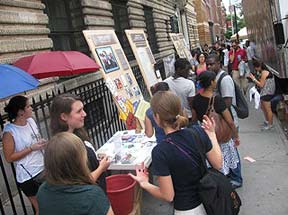
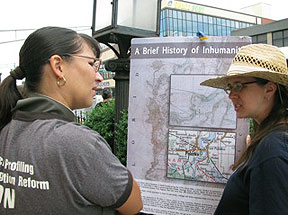
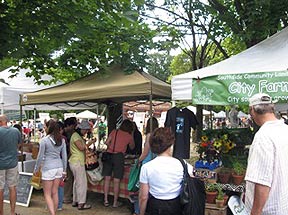
The first stop was at the largest of Providence's numerous farmers markets -- the Broad Street Market -- where community members gather every Saturday during the season to buy fresh produce from local farmers and to meet up with friends. |
Inspired by the growing number of their students involved in the Campaign for Fair Food, Brown University media (pictured above) was there to document the morning's activities. |
||
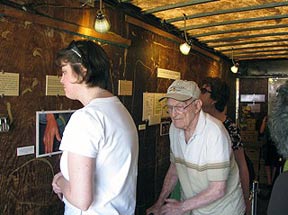 Among the visitors was one very special guest -- the 96-year-old grandfather of museum docent Brigitte Gynther -- who made the climb into the box truck to see the exhibit up close and personal. |
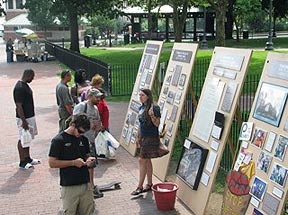 The second stop for the day was at a prime location in the middle of downtown Providence, facing Kennedy Plaza and right next to City Hall. |
||
|
|
||
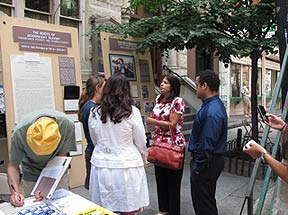
 Likewise, there was a strong support from the labor movement. Above, George Nees (right), President of the Rhode Island AFL-CIO, and James Celenza, director of Rhode Island Committee on Occupational Safety and Health, tour the museum. |
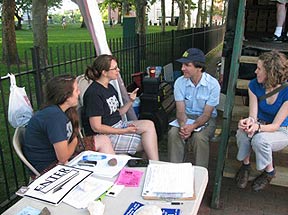 And, of course, our friends from Rhode Island Jobs with Justice joined us to plan for the future of the Ahold campaign. |
||
|
|
||
|
In their own words, "The Salem Award for Human Rights and Social Justice is given each year to keep alive the lessons of the Salem Witch Trials of 1692 and to recognize those who are speaking out and taking action to alleviate discrimination and promote tolerance." |
||
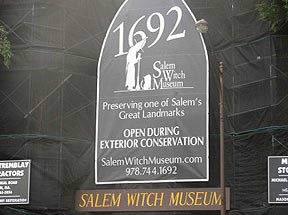
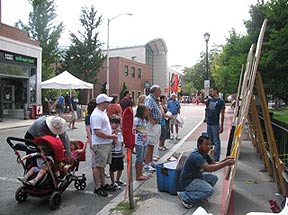 A year later, award committee members received the Modern-Day Slavery Museum as it set up in the heart of Salem's historic district. |
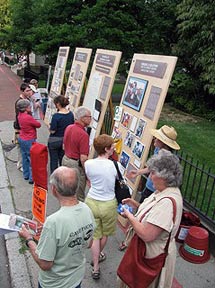 And in a stoke of fortuitous timing, the museum was featured as part of Salem's Heritage Festival, an annual event that attracts visitors from across New England. The historically-minded setting provided an opportunity for hundreds of consumers to learn about the heritage not only of their region, but of their food system and the unbroken chain of exploitation that has underlied it for four centuries. |
||
 |
|||||
|
|||||
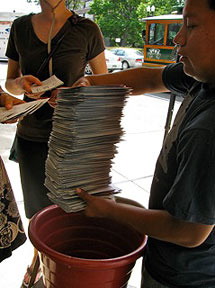
In the U.S., the tour crew (pictured above) delivered nearly 1,000 postcards -- each signed by consumers during the first half of the three-week tour -- to Ahold USA's corporate headquarters in Quincy, MA. |
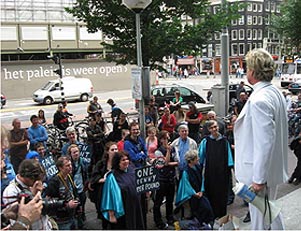
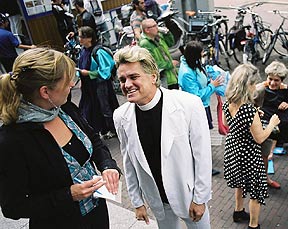
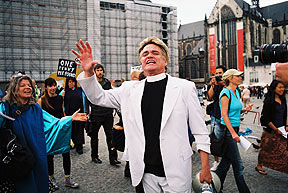
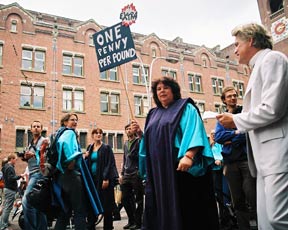
They were joined by the one and only Rev. Billy of the Church of Life after Shopping, shown here above talking with a member of the Dutch media before the launch of the march. Rev. Billy was in Amsterdam for the premier of "Crazyshopping," a musical comedy which opened Sunday in Amsterdam's biggest theater, the 1750 seat Royal Carre Theater. |
||||
|
|
||||
|
The Ahold representative emphasized his company's ongoing "investigation" of its Florida tomato supply chain and its two meetings with CIW representatives as evidence that his company is taking the Campaign for Fair Food seriously (though, as the Campaign is now entering its second decade and counts nine other major food corporations among its active partners -- and the slavery operation that Ahold claims to be "investgating" was investigated and prosecuted in US federal court -- it would seem that the time for "investigation" is over and the time for action is now...). From all reports, the exciting Amsterdam action -- and Ahold's continuing refusal to join in a formal partnership with the CIW for fair farm labor conditions -- left the Dutch branch of the Campaign for Fair Food energized and ready for more acton in the weeks and months ahead! |
||||
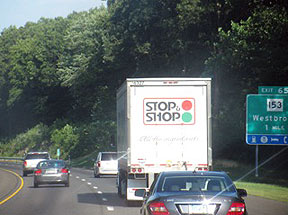
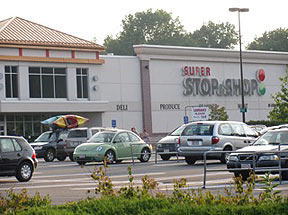
This Stop&Shop distribution truck (Stop&Shop is one of Ahold's key US grocery chains) conveniently led the way along a good stretch of the route. |
|
||||
Ahold's corporate employees could hardly look out their windows without seeing the museum and the crowd it attracted throughout the day. |
|
||||
|
But before our delegation was allowed to leave on such a bitter note, it appears that some cooler minds within Ahold may have regretted their hard-line "leave it on the sidewalk" security position, as the head of security was dispatched to meet the delegation. |
||||
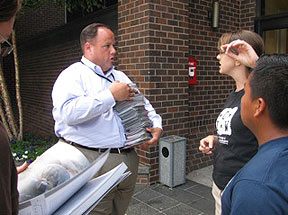
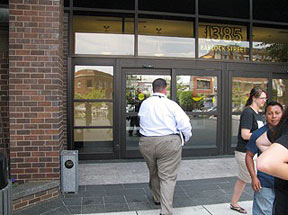 Although we're not sure you could call it a meeting, since it consisted of little more than Ahold's security chief taking the stack of postcards, turning, and walking back inside... |
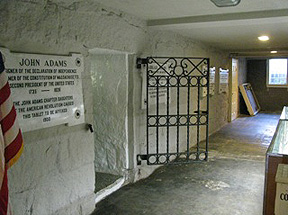
Adams was a staunch foe of slavery and his son, John Quincy Adams, successfully argued the famous "Amistad" case in the Supreme Court, resulting in the freedom of dozens of Africans who had seized control of the slave ship on which they were being transported to the new world before it could deliver them into a life of slavery. But before Amistad, and more than half a century before the Emancipation Proclamation, Adams the elder had this to say about slavery: “Consenting to slavery is a sacrilegious breach of trust, as offensive in the sight of God as it is derogatory from our own honor or interest of happiness” Two hundred years later, those words remain wise and needed counsel, for Ahold, and the food industry as a whole, from farm to plate. |
||||
 |
|||||
|
|||||
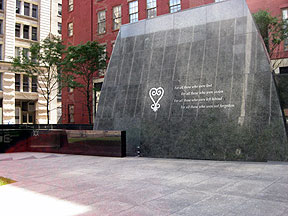
This long-forgotten history is best reflected at African Burial Ground National Monument (pictured above), a 6.6-acre burial ground in Lower Manhattan that was used for both free and enslaved Africans from the 1690s until 1794. The burial ground was lost for generations and not re-discovered until 1991 when excavators were preparing the land at 290 Broadway for a new federal building. Placing New York's slavery practices into context, Dr. Leslie Harris writes, "As in the South, black slave labor was central to the day-to-day survival and the economic life of Europeans in the colonial North, and no part of the colonial North relied more heavily on slavery than Manhattan.... Under both the Dutch and the British, slaves performed vital agricultural tasks in the rural areas surrounding New York City.... In the eighteenth century, only Charleston and New Orleans exceeded New York City in number of slaves." |
|
||||
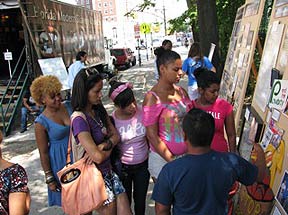 And with our gracious host and continuous visits from old friends (including some familiar faces from the Farmworker Freedom March), we didn't feel like strangers in the big city for long. Above, Las Mariposas Urbanas, the youth group at the Iglesia San Romero de las Americas (UCC), receive a firsthand tour of the museum from the CIW's Oscar Otzoy. |
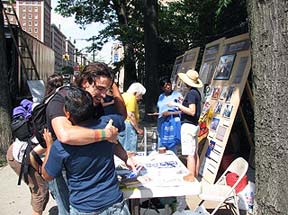 The tour crew made plenty of new friends, as well, such as this passerby who was so touched by the exhibit that he shared a hug with Oscar. |
||||
"A century and a half after the Civil War, forms of slavery continue to exist in the world, including in the United States. This Mobile Museum brings to light this modern tragedy and should inspire us to take action against it." |
|
||||
|
|
||||
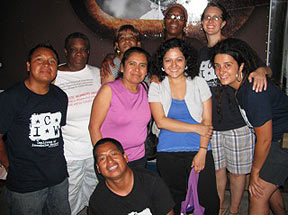 ... and Domestic Workers United, another organization fighting against the long shadow of slavery. In case you missed the news, DWU recently won a major victory in Albany with the passage of the Domestic Workers' Bill of Rights. Congratulations, once again! In June, the New York Times reported, "The State Senate has just passed a domestic workers’ bill of rights, with an array of guarantees that most workers take for granted, like paid holidays, sick days, vacation days and the right to overtime pay and collective bargaining.... Domestic workers, like farm workers, have long struggled for equality in the workplace. Labor protections drafted in the New Deal specifically excluded both groups of workers, who remain highly vulnerable to exploitation." (Farmworkers, however, have had less success as of late petitioning the State Senate for similar reforms.) |
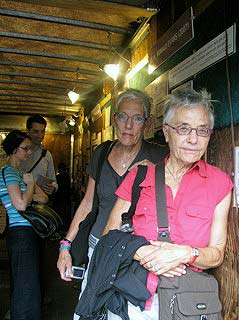 Day Two was rounded out with a special visit from Florrie Burke (second from right), long-time CIW supporter and steadfast ally in the fight against modern-day slavery with the New York Anti-Trafficking Network and Freedom Network USA. |
||||
Above, Deputy Mayor of Legal Affairs
Carol Robles-Roman and Deputy Counsel Norma Abbene speak with the CIW's Julia Perkins about the city's "Let's End Human Trafficking" initiative and the Campaign for Fair Food. |
|
||||
 ... and, later that day, workers from Make the Road New York (above), long, long-time friends who accompanied us on the very first Taco Bell Truth Tour! Again in the evening, the museum was the place to be as community members got off work and visited, including members of Brandworkers International and the Global Action Project. |
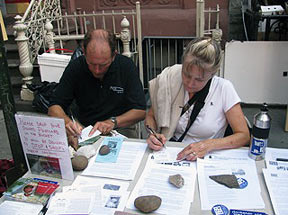 Even a pair visitors who had first seen the museum in its native Florida happened upon it in New York City... |
||||
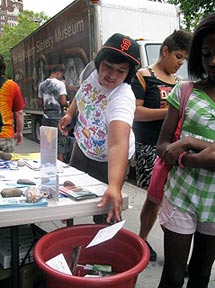 ... and they joined the growing ranks of consumers who are letting Ahold USA know exactly what they think of its decision to turn a blind eye to the exploitation in Florida's fields. |
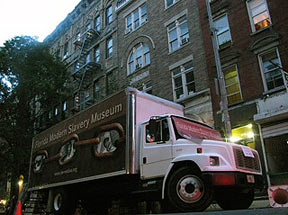 As the final day drew to a close, the museum crew began to turn its attention to the road ahead on the Northeast Tour. But by any reasonable standard, the three-day visit was a smashing success, made possible, in large part, by the tireless efforts of the Community/Farmworker Alliance (who are preparing to turn the heat up on NYC grocery fave Trader Joe's) and the National Economic and Social Rights Initiative (NESRI). Thanks to one and all who came out to the museum and continue to stand by the CIW in the Campaign for Fair Food! Next stop: Quincy, MA! |
||||
 |
||
|
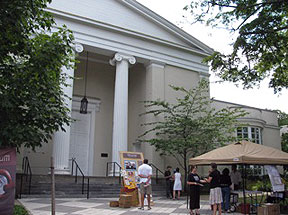
On Day Six, tour crew members found themselves at the steps of beautiful Nassau Presbyterian Church in the heart of Princeton, just blocks from the renowned university of the same name. |
|
|
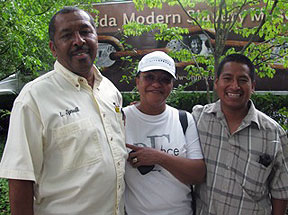 The museum was also lucky enough to host some important living history as Larry Spruill (left), a facilities manager at Princeton University, shared his family's stories of work and struggle in the agricultural fields of Somerset, North Carolina dating back to the period of chattel slavery. |
|
(As an interesting historical aside, Witherspoon Street was the one-time church of Renaissance man and life-long social justice crusader Paul Robeson. Robeson's father, himself an escaped slave from North Carolina, served as the church's minister from 1881 until 1901.) |
|
|
|
|
|
|
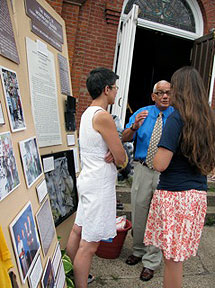 Above, the Rev. Noelle Damico of the Presbyterian Church (U.S.A.) (left) jumps in for some tag-team docenting alongside Kate Hadley of the Student/Farmworker Alliance... |
|
|
Next up: Three days in New York City! |
|
 |
|||||
|
|||||
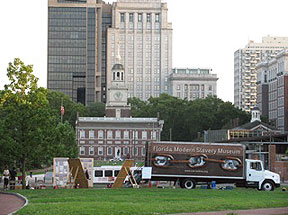
The site for most of the visit -- directly outside Independence Hall, in a highly trafficked constellation of museums and historic buildings -- provided an ideal opportunity to reflect on the themes of freedom and bondage throughout American history. After all, it was in the colonial-era building located directly behind the mobile museum (pictured above) that the Declaration of Independence and Constitution were debated and adopted more than two hundred years and forty ago. And it was in that same building where language condemning the slave trade as an "assemblage of horrors" was stripped from an early draft of the Constitution, in effect allowing the importation of slaves to continue unabated for another twenty years. |
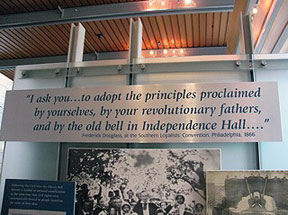
The Liberty Bell, originally known as the "Independence Bell," was so named by the growing abolitionist movement which called Philadelphia home. In fact, the American Anti-Slavery Society was founded in Philadelphia in 1833 and later counted among its key members none other than Frederick Douglass. Douglass himself had passed through Philadelphia via the Underground Railroad in 1838 and would return to Independence Square six years later to encourage the nation to live out the famous bell's inscription to: "... Proclaim liberty throughout all the land unto all the inhabitants thereof..." Over the course of the mid-ninteenth century, many men and women, both black and white, came to see the Liberty Bell as a powerful symbol of the struggle to abolish slavery. |
||||
|
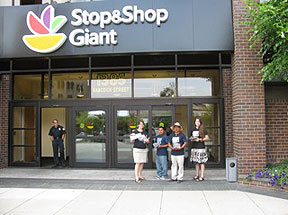
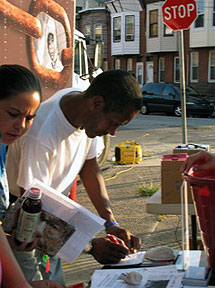 As has been the case throughout the tour, the exhibit moved people to action. Above, community members sign postcards of support for the Campaign for Fair Food that will soon be delivered to Stop & Shop supermarket's corporate headquarters in Quincy, MA. |
||||
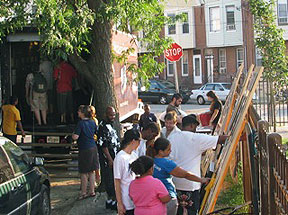
 The visitors on Potter St. continued to stop by until late in the evening... |
|
||||
|
 Even tourism industry workers stopped by, such as this man sporting layered colonial garb and a tricorne, apparently indifferent to the near-suffocating heat and humidity inside the box truck. |
||||
|
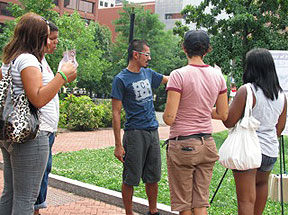 But regardless of size, the crowds were expertly handled by our crack docent team, including new addition Rudy Cortinas of the Student/Farmworker Alliance. |
||||
|
|
||||
|
|||||
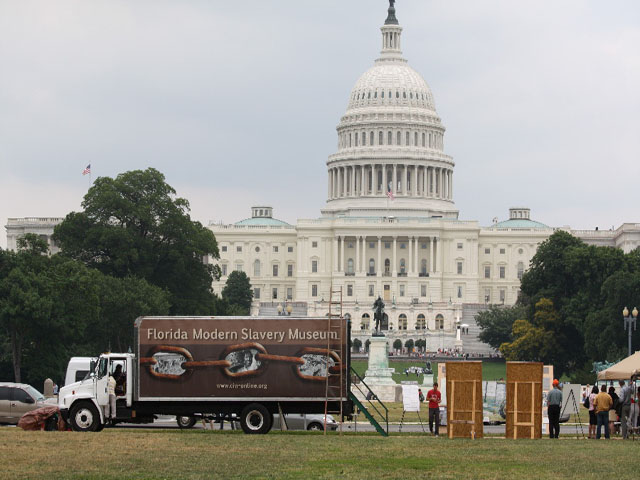 Last time the Modern-Day Slavery Museum graced the streets of DC, it was in the shadow of the Capitol Building on the National Mall, following a very special ceremony at the State Department. |
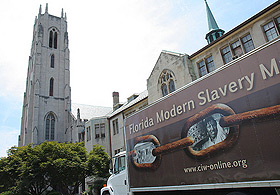 This time -- though the setting may have been a bit less monumental, and we arrived to the city with a tad less ceremony -- we had a pretty spectacular spot too, setting up our traveling museum at the Church of the Pilgrims just blocks from DC's bustling Dupont Circle neighborhood. |
||||
|
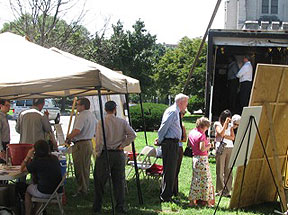 ... but as the day progressed, the crowds slowly grew... |
||||
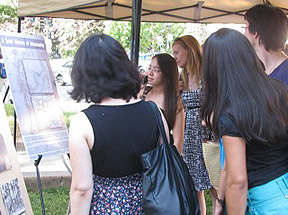 ... bringing with them some friends, like this group from the DC-based Polaris Project, one of the country's largest anti-slavery organizations and a close ally in the fight to end modern-day slavery... |
 ... and this former fellow Floridian, Samuel Jennings, president of the Orlando chapter of the NAACP in 1964 who fought to integrate Orlando's lunch counters and later visited farmworker labor camps as a Department of Labor inspector. Mr. Jennings came upon the museum by chance on his way to work and stayed to take it all in. |
||||
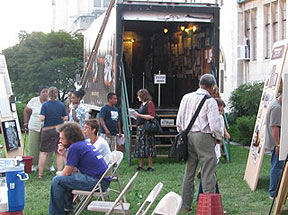 And as the gloaming came to the streets of Washington, the museum truly came to life... |
Next stop: Philadelphia! |
||||
 |
|
|
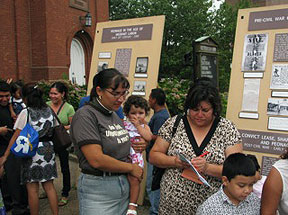
Particularly strong was the turnout from local churches, including Westminster Presbyterian, Trinity Episcopal, and Charlottesville First Baptist, where pastors and parishioners alike made sure to spread the word of the museum stop during morning services. |
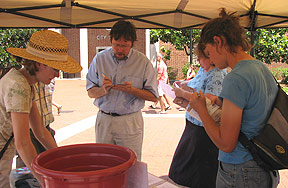 The intense sun had one unexpected benefit -- driving museum goers toward the shaded information table, where scores of people signed postcards calling on Giant supermarket (one of Amsterdam-based Ahold's many brands) and Kroger to support the Campaign for Fair Food. |
Necessity being the mother of invention, two new museum features were born on this scorching day in Charlottesville -- umbrellas for shade, and ice water for all! And just like that, the show could go on... |
"Traveling museum displays modern-day slavery" "A mobile slavery museum stops in Charlottesville" NBC 29 video |
|
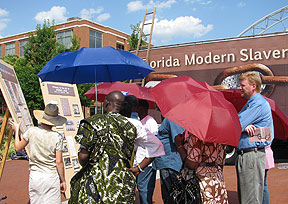 -- and foreign! At the very peak of the day's heat, the museum was host to a delegation of visitors from Charlottesville's sister city of Winneba in Ghana. Charlottesville's mayor, Dave Norris (on right with blue shirt), who was largely responsible for securing the museum's plum location on Charlottesville's mall for the day, arranged for the visit and accompanied the delegation on its tour... |
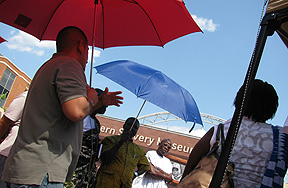 ... which began with a brief orientation... |
 ... continued with a visit to the truck itself and its exhibits on the many recent slavery prosecutions that make up the contemporary history of forced labor in Florida's fields... |
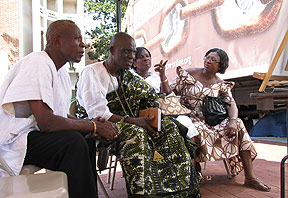 ... and included a viewing of the "The Orange Juice Man," the 60 Minutes video on the life and times of the infamous farm labor boss Wardell Williams. The must-see video does an excellent job of demonstrating the abject failures of government safeguards, both local and federal, in protecting farmworker rights. |
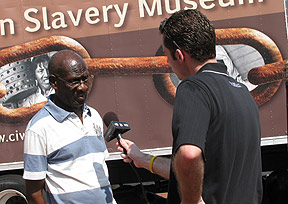 Once through the museum, the Ghanian delegation didn't hesitate to share their feelings of shock and dismay at the continued existence of forced labor in US fields in 21st century. Parts of this interview with a member of the delegation are included in the Channel 19 report here. |
 They also took action, joining hundreds of Charlottesvillians on this day in signing postcards to Giant and Kroger. |
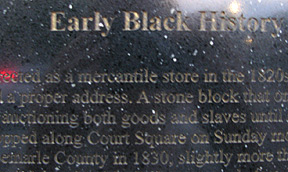
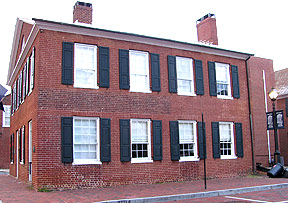 With the day coming to a close, the Modern-Day Slavery Museum team couldn't leave Charlottesville without a final stop at one little known landmark in the heart of the old city, the "Number Nothing" house (the address is 0 Park Street), the site where enslaved Africans were sold at public auction to the planters (including many of the Old Dominion's favorite sons...) that settled the state. Today, the painted sign that once announced the auction block has faded (the strip of darker brick that covers the space between the two floors is where the letters could still be read just 20 years ago)... |
Which is where the Modern-Day Slavery Museum picks up the story... and where, if you live in Washington, D.C., you can learn more about the post-Civil War history of forced labor in Florida and along the East Coast by coming out to the Church of the Pilgrims at 22nd and P Streets and checking out the second stop of the 2010 Northeast Tour. See you there! |
 |
|
Modern-Day Slavery Museum Northeast Tour now on the road!
As the Northeast Tour crew makes its way from Immokalee to Charlottesville, Virginia, ahead of tomorrow's launch of the three-week tour, the museum is starting to create a buzz in the blogosphere. UPDATE: Charlottesville NPR station runs a great story on the coming museum stop! Here below are a few examples of the growing coverage on the eve of what is sure to be an exciting tour:
See you on the road! |

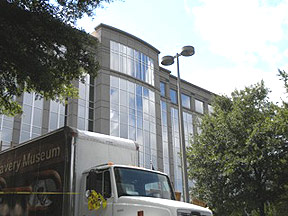
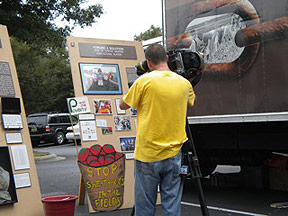
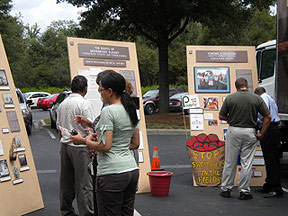

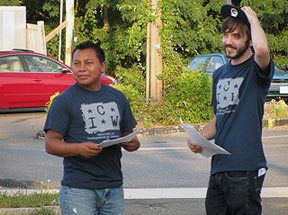
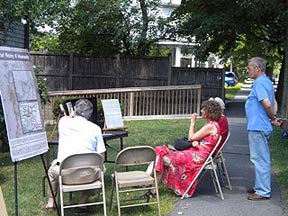
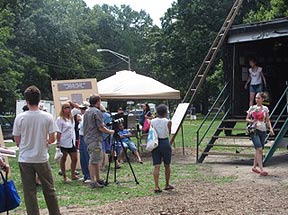
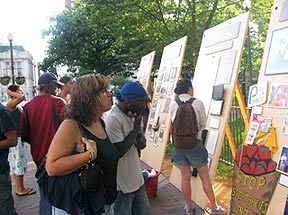
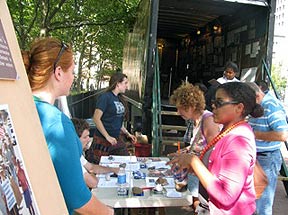
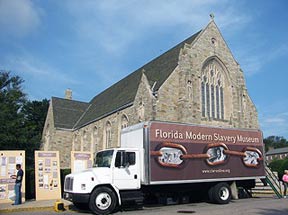
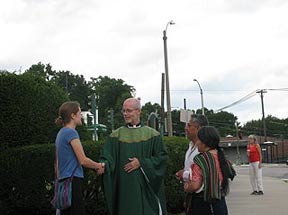
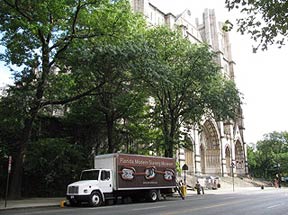
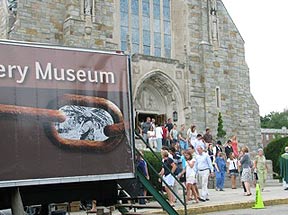 St. Ignatius offers three Masses on Sunday mornings, and following each service, dozens of parishioners filed out of the church and toured the waiting museum.